Friction Product Design: Optimizing Performance and Reliability
- protecfrictionus
- Jun 23
- 3 min read
Understanding the importance of Friction Product Design is crucial for engineers, manufacturers, and product developers aiming to deliver high-performing and reliable solutions. Overlooking the role of friction in the design process can lead to premature wear, system failure, and increased maintenance costs. With the advancement of material science and engineering, the need to precisely control frictional properties has become central to modern product innovation.
The Role of Friction in Product Design
Friction product design is the practice of managing and optimizing friction between interacting surfaces in mechanical systems. By focusing on Friction in the Design Process, engineers can enhance safety, durability, and efficiency in products ranging from automotive brakes to industrial clutches and consumer electronics.
Incorporating the right frictional properties early in the design process:
Reduces the risk of component failure
Improves energy efficiency
Extends product lifespan
Enhances user experience
Understanding and optimizing friction ensures that products not only meet performance expectations but also maintain reliability under a variety of operating conditions.
Key Considerations in Friction Product Design
When addressing friction in the design process, several factors must be evaluated to achieve the desired balance between grip and wear. Ignoring these factors can compromise the functionality and longevity of the product.
Material Selection
The choice of materials is pivotal in friction product design. Different materials offer varied friction coefficients, heat resistance, and wear characteristics.
Metals: Commonly used for high-strength applications but may require lubrication.
Ceramics: High temperature and wear resistance, ideal for high-performance brakes.
Polymers: Lightweight and customizable, used in consumer electronics and automotive interiors.
Composites: Offer tailored friction and wear properties for specialized applications.
Surface Engineering
Surface treatments such as coatings, texturing, and polishing play a significant role in controlling friction in the design process.
Coatings: Anti-friction or wear-resistant coatings extend component life.
Texturing: Microscale surface patterns can optimize friction for specific uses.
Polishing: Reduces unwanted roughness, lowering friction in precision systems.
Environmental Conditions
Environmental factors critically impact friction product design. Considerations include:
Temperature: High temperatures can degrade material properties and change friction behavior.
Humidity: Moisture can alter surface interactions.
Contaminants: Dust, oil, and other particles affect friction and wear rates.
Benefits of Effective Friction Product Design
Designing with friction in mind delivers tangible advantages across numerous industries. Here are some of the key benefits:
Safety: Reliable friction performance is essential for brakes, clutches, and other safety-critical components.
Efficiency: Proper friction management reduces energy losses and operational costs.
Durability: Minimizing excessive wear extends maintenance intervals and product life.
Noise Reduction: Optimized friction reduces squealing and other unwanted noises in automotive and industrial applications.
Common Applications of Friction Product Design
The principles of friction product design are widely applied in various sectors, from automotive to electronics.

Steps in the Friction Product Design Process
A systematic approach helps ensure successful integration of friction in the design process:
1. Define Performance Requirements
Identify operating conditions and required frictional characteristics.
2. Select Materials and Surface Treatments
Choose materials and coatings based on durability, cost, and functionality.
3. Prototype and Test
Develop prototypes and conduct extensive friction and wear testing.
4. Analyze Results
Use data to optimize material selection and surface engineering.
5. Iterate and Finalize Design
Refine the design to address any issues or improve performance.
Real-World Example: Brake Pad Design
A classic example of friction product design is in automotive brake pads. Engineers must balance high friction for stopping power with low wear for longevity. Material choices such as semi-metallic, ceramic, or organic compounds each offer specific advantages. By carefully considering friction in the design process, manufacturers achieve optimal braking performance, safety, and value for customers.
Industry Insights and Recent Advances
The global friction products and materials market is projected to reach over $20 billion by 2027, highlighting its growing importance.
Advances in nanotechnology and composite materials are enabling friction products that are lighter, more durable, and environmentally friendly.
Digital simulation tools are now widely used to predict frictional behavior, reducing the need for expensive physical prototyping.
Best Practices for Friction Product Design
To ensure success, consider these industry-accepted best practices:
Conduct early-stage friction analysis using simulation software
Collaborate with material scientists to tailor frictional properties
Test under real-world conditions to validate performance
Regularly update designs based on field feedback and new material developments
Focus on sustainability by selecting recyclable or low-impact materials
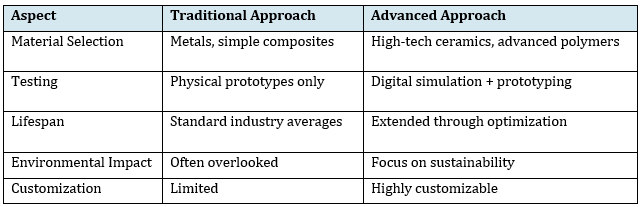
Comparison Table: Traditional vs. Advanced Friction Product Design
Conclusion
Friction product design is a cornerstone of mechanical engineering, directly influencing performance, reliability, and user satisfaction. Call Now to learn how advanced friction engineering can improve your products and operations.
Incorporating friction in the design process from concept to production ensures that products meet rigorous safety and efficiency standards while minimizing costs and environmental impact. By leveraging advanced materials, simulation tools, and industry best practices, teams can create innovative friction solutions that stand the test of time. Contact us today to discuss customized friction solutions tailored to your application requirements.


Comments