Woven Friction Materials: The Engineered Strength Behind Reliable Motion and Control
- protecfrictionus
- Dec 18, 2025
- 5 min read
Some of the most important components in modern machines are never seen. They do not flash, beep, or draw attention. Yet without them, motion becomes unpredictable, systems lose control, and safety is compromised. Among these quiet achievers are Woven Friction Materials—a class of engineered solutions designed to manage force, heat, and movement with remarkable consistency.
From heavy industrial machinery to precision equipment, woven friction technologies play a critical role in ensuring that motion stops when it should, holds when it must, and responds exactly as intended. Their importance grows as industries demand higher performance, longer life, and greater reliability from every component.
What Makes Woven Friction Materials Different?
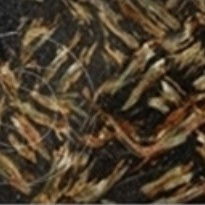
At their core, woven friction materials are created by interlacing fibers into structured patterns, much like a textile. However, the similarities end there. These fibers—often synthetic, mineral, metallic, or composite—are selected and woven to achieve very specific mechanical and thermal properties.
The weaving process allows engineers to fine-tune friction behavior in ways that molded or bonded materials cannot easily replicate. Fiber orientation, weave density, and material composition all influence how the surface reacts under pressure, speed, and temperature.
This structural control is the defining advantage of Woven Friction Materials. They are not just friction surfaces; they are engineered systems.
The Science Behind the Weave
The woven structure distributes load evenly across the surface. Instead of concentrating stress in one area, the material shares it across countless interlaced fibers. This reduces localized wear and helps the material maintain consistent friction over time.
Heat management is another key benefit. Friction naturally generates heat, and excessive heat leads to glazing, fading, or material breakdown. The porous nature of woven structures allows heat to dissipate more effectively, preserving performance even under demanding conditions.
In applications where reliability is non-negotiable, these characteristics make woven friction solutions a preferred choice.
Understanding Woven Friction Lining
A commonly used form of woven friction technology is the Woven Friction Lining. These linings are integrated into braking systems, clutches, and torque-limiting devices where controlled friction is essential.
Woven friction linings are valued for their:
Stable coefficient of friction
Resistance to wear and deformation
Consistent performance across temperature ranges
Smooth engagement and disengagement behavior
Long operational life
Unlike basic friction pads, woven linings are designed to perform predictably under repeated stress cycles. This predictability is critical in systems where even small variations can lead to mechanical failure or safety risks.
Applications Across Industries
The versatility of woven friction materials allows them to serve a wide range of industries, each with its own performance demands.
In industrial machinery, they provide reliable braking and holding power in hoists, presses, and conveyor systems.
In automotive and transportation sectors, woven friction linings contribute to clutch systems, parking brakes, and auxiliary braking mechanisms.
In marine and offshore equipment, their resistance to moisture and temperature fluctuation becomes a significant advantage.
In energy and heavy engineering environments, they withstand extreme loads and prolonged operating cycles.
Across these applications, the common requirement is control—controlled motion, controlled stopping, and controlled force transfer.
Why Consistency Matters More Than Peak Performance
One of the biggest misconceptions about friction materials is the obsession with maximum friction. In reality, consistency matters far more.
A friction material that performs exceptionally once but degrades unpredictably over time introduces risk. Woven friction solutions are engineered for repeatability. They deliver the same response today, tomorrow, and after thousands of cycles.
This consistency reduces maintenance frequency, minimizes downtime, and enhances overall system safety. For operators and engineers alike, predictable performance builds confidence.
Material Selection and Customization
Not all woven friction materials are created equal. The choice of fibers and resins determines how the material behaves under specific conditions.
Some formulations prioritize high-temperature resistance.
Others focus on smooth engagement or noise reduction.
Certain designs emphasize durability in abrasive environments.
This is where customization becomes critical. By adjusting the weave pattern, fiber composition, and impregnation methods, manufacturers can tailor friction materials to exact application requirements.
Specialist providers, such as those represented by protecfriction.com, offer engineered solutions rather than off-the-shelf compromises. Their expertise ensures that each woven friction lining performs optimally within its intended system.
Durability Under Pressure
Durability is not just about how long a material lasts. It is about how it behaves as it ages.
Woven friction materials tend to wear gradually and evenly. This controlled wear pattern allows systems to maintain performance without sudden drops or failures. It also makes inspection and replacement schedules more predictable.
In high-stakes environments, where unexpected failure can halt operations or cause damage, this reliability is invaluable.
Environmental and Operational Advantages
Modern woven friction materials are increasingly designed with environmental considerations in mind. Many formulations reduce or eliminate hazardous substances while maintaining performance standards.
Operationally, their stability helps reduce noise, vibration, and harshness. Smooth engagement leads to less shock on surrounding components, extending the life of the entire system.
Over time, these benefits translate into lower total cost of ownership—an important metric for any industrial operation.
The Role of Testing and Quality Control
Performance claims mean little without validation. High-quality woven friction materials undergo rigorous testing under simulated real-world conditions.
This includes load testing, thermal cycling, wear analysis, and friction coefficient measurement across different speeds and pressures. Only through this process can manufacturers ensure that each woven friction lining will perform as expected once installed.
Quality control at every stage—from raw material selection to final inspection—is what separates reliable friction solutions from inconsistent ones.
Looking Ahead: The Future of Woven Friction Technology
As machinery becomes more powerful and more precise, the demands placed on friction materials will continue to evolve. Higher speeds, greater loads, and tighter tolerances require friction solutions that are smarter and more adaptable.
Innovations in fiber technology, weaving techniques, and resin systems are pushing woven friction materials into new performance territories. Future designs may offer enhanced thermal control, longer life cycles, and even adaptive friction characteristics.
What remains constant is the need for trust—trust that when a system needs to hold, slow, or stop, the friction material will respond without hesitation.
Final Thoughts
Woven Friction Materials may operate behind the scenes, but their impact is felt across industries. Through engineered structure, material science, and precision manufacturing, they deliver the consistency and control that modern systems demand.
Within this category, the Woven Friction Lining stands out as a proven solution for braking and torque applications where reliability is paramount.
By working with experienced friction specialists and platforms like protecfriction.com, engineers and manufacturers gain access to solutions that are not just durable, but intelligently designed for real-world performance. In a world driven by motion, it is often the materials that manage friction that make all the difference.


Comments